Frequently Asked Questions
Clarifying what Psychernetics is, how it works, who it is for, and why human intelligence now requires deliberate structure in the age of artificial intelligence.
Psychernetics often invites thoughtful questions because it does not sit neatly within familiar categories. It is not conventional coaching, not therapy, and not simply another performance framework.
The questions below explain the foundations of the work, who it is designed for, and how its ideas are intended to be approached.
Understanding Psychernetics
What is Psychernetics?
Psychernetics is a structured framework for developing cognitive sovereignty in the age of artificial intelligence.
It integrates psychology, systems thinking, philosophy of mind, embodied awareness, and disciplined reflection to help individuals think with greater clarity, independence, and depth.
Rather than offering motivation or surface-level optimisation, Psychernetics examines how perception, attention, interpretation, and decision-making are shaped by modern conditions, then provides a practical architecture for restoring authorship.
How is Psychernetics different from coaching?
Most coaching focuses on goals, performance, or behavioural outcomes. Psychernetics begins further upstream.
It examines how a person is thinking before it examines what they are trying to achieve. The emphasis is not simply on motivation or action, but on the quality of perception, interpretation, and internal structure that generates action.
For this reason, Psychernetics often feels deeper, slower, and more foundational than conventional coaching.
Is Psychernetics therapy?
Psychernetics is not therapy, although it draws upon psychological insight and decades of clinical understanding.
Therapy often addresses distress, emotional pain, trauma, or psychological symptoms. Psychernetics is concerned with the architecture of thought, self-regulation, and human intelligence under modern cognitive pressure.
Some individuals arrive through therapeutic interest, but the framework itself is designed for broader intellectual and developmental application.
What does cognitive sovereignty mean?
Cognitive sovereignty refers to the ability to remain the author of one’s own thinking in an environment increasingly shaped by algorithms, speed, digital interruption, and external influence.
It means being able to pause before reacting, think independently, hold complexity without collapse, and distinguish between what is internally chosen and what has been externally conditioned.
This sits at the centre of Psychernetics.
Why does Psychernetics matter now?
Modern life increasingly rewards speed, reaction, simplification, and constant stimulation. Artificial intelligence amplifies this further by accelerating information, language, decision support, and cognitive outsourcing.
The risk is not simply technological dependence. The deeper risk is gradual loss of depth, discernment, and authorship.
Psychernetics exists because intelligence now requires deliberate protection and conscious structure.
Is Psychernetics anti-AI?
No. Psychernetics does not oppose artificial intelligence.
It assumes AI will increasingly shape professional, intellectual, and personal life. The question is whether human beings remain conscious users of these systems or become unconsciously shaped by them.
The aim is not rejection of technology, but intelligent relationship with it.
Who Psychernetics Is For
Who is Psychernetics designed for?
Psychernetics is designed for thoughtful adults who sense that modern life increasingly fragments attention, compresses thought, and weakens internal clarity.
It often resonates strongly with executives, founders, professionals, clinicians, creatives, and intellectually serious individuals who want more than conventional self-development.
Many people arrive because they are successful externally but recognise a need for deeper internal structure.
Is Psychernetics suitable for executives, founders, and professionals?
Yes. In many ways, these environments make Psychernetics more relevant.
Leadership, decision-making, complexity, responsibility, and cognitive overload all place pressure on internal architecture. The higher the level of responsibility, the more important it becomes to think clearly under complexity without becoming reactive or fragmented.
Psychernetics is particularly relevant where external success has outpaced internal integration.
Do I need a background in psychology or philosophy?
No.
The ideas are intellectually serious, but they are written and taught in a way that remains accessible to thoughtful readers from many backgrounds.
Some people recognise the philosophical and psychological foundations immediately. Others simply recognise that the material describes what modern life often feels like but rarely explains clearly.
Is Psychernetics suitable if I already work with a therapist or coach?
Yes.
Psychernetics does not conflict with thoughtful therapeutic or developmental work. In many cases it strengthens it by giving people a clearer language for attention, structure, interpretation, and authorship.
It can sit alongside other forms of development because its focus is foundational rather than narrowly technique-driven.
Is Psychernetics relevant for neurodivergent thinkers?
Often, yes.
Many neurodivergent individuals already experience the world with heightened sensitivity to pattern, contradiction, intensity, or system structure. Psychernetics can help organise this more consciously.
It does not treat neurodivergence as deficit. In many contexts, certain neurodivergent traits may represent important cognitive strengths in an increasingly machine-shaped world.
Method and Approach
How does Psychernetics actually work?
Psychernetics works by helping individuals observe and reorganise the hidden structures through which they think, interpret, and respond.
This includes attention, internal dialogue, pattern recognition, embodied awareness, decision pacing, and meaning formation.
The aim is not simply insight, but repeatable internal architecture.
What disciplines inform Psychernetics?
Psychernetics draws from multiple disciplines, including psychology, psychotherapy, systems thinking, philosophy, neuroscience, trauma understanding, embodied cognition, and contemporary questions raised by artificial intelligence.
Its purpose is not academic synthesis for its own sake, but practical integration.
Why does Psychernetics focus on embodiment as well as thinking?
Because human intelligence is not purely verbal or analytical.
Much of perception, intuition, emotional reading, and judgement emerges through embodied processes before language fully explains them.
A person may understand something intellectually while remaining physically misaligned with it. Psychernetics therefore includes embodiment as part of serious cognitive work.
Is Psychernetics a philosophy, a method, or a programme?
It is best understood as a framework that contains all three.
It includes a philosophical view of human intelligence, a practical method for developing internal structure, and a series of pathways that apply these ideas progressively.
The framework comes first. The pathways follow from it.
Can Psychernetics help with clarity, attention, and decision-making?
Yes, although indirectly.
Rather than offering isolated techniques, Psychernetics strengthens the conditions from which clarity and decision-making naturally improve.
When internal noise reduces, discernment often becomes more reliable.
PIIA: Integrated Intelligence Assessment
What is PIIA?
PIIA is the Psychernetics Integrated Intelligence Assessment, developed by Dr Tom Barber as an applied assessment of the Psychernetic model of integrated human intelligence.
Rather than attempting to measure how intelligent you are, PIIA explores how four capacities of integrated intelligence appear to be available within your current pattern of functioning: Presence, Embodied Emotion, Meaning and Coherence.
The assessment consists of 32 questions, takes around five minutes to complete, and provides your personalised profile immediately. PIIA is free to take and no email address is required to receive your results.
What does my PIIA profile tell me?
PIIA does not give you an intelligence score or assign you a personality type. It shows how each of the Four Capacities appears to be available within your current pattern of functioning, using four states: Constrained, Emerging, Available and Strongly Available.
Taken together, these produce 256 possible four-capacity configurations. The value lies not simply in any individual result, but in the pattern formed across the Four Capacities and what that pattern may reveal about how your intelligence becomes available when you perceive, interpret, judge and act.
Your profile is a snapshot rather than a fixed description of who you are. Capacity availability can change across circumstances and can be strengthened through deliberate development.
What should I do after completing PIIA?
Your PIIA profile is a starting point. It can help you identify where integrated intelligence appears readily available, where it may become less reliable, and where development may have particular value.
You can explore the Psychernetics framework to understand the architecture behind your results, or move into structured development through Psychernetics Compass.
Programmes and Access
How do I know where to begin?
Most people begin with the ideas first.
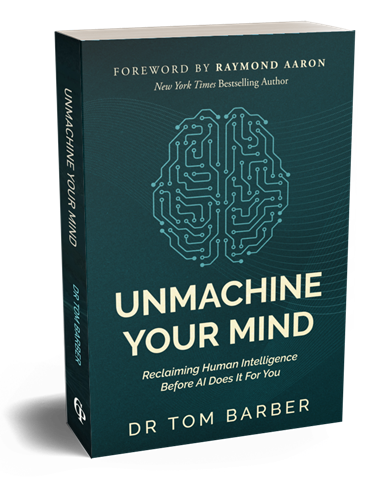
For some, that means reading Unmachine Your Mind. For others, it means exploring the core Psychernetics pages and understanding the framework before moving further.
The aim is not speed, but orientation. The right starting point is the one that allows the ideas to become clear rather than rushed.
What is Psychernetics Compass?
Psychernetics Compass is the structured developmental programme through which the architecture of Psychernetics becomes lived practice.
Where PIIA helps you see how the Four Capacities appear to be available within your current pattern of functioning, Compass begins the work of deliberately developing that architecture.
It strengthens Presence, Embodied Emotion, Meaning and Coherence, while introducing the wider Psychernetic architecture through the Four Supporting Pillars of Psychernetic Practice, Co-PILOT and the Continuum.
Compass is not designed around achieving an ideal profile or correcting a particular PIIA result. It provides a structured developmental pathway for strengthening the conditions through which integrated intelligence can remain increasingly available across everyday life, complexity and pressure.
PIIA helps you see the architecture. Compass helps you develop it.
Can I begin with Psychernetics without joining a programme?
Yes.
You do not need to join a programme to begin exploring Psychernetics.
Many people start by engaging with the core Psychernetics ideas, reading Unmachine Your Mind, or taking the Psychernetics Integrated Intelligence Assessment (PIIA) to explore how the Four Capacities appear within their own current pattern of functioning.
PIIA is free, takes around five minutes, and provides your personalised profile immediately without requiring an email address.
Psychernetics is designed so that meaningful understanding can begin before formal participation. If you later want to move from exploration into structured development, Psychernetics Compass provides the first developmental pathway.
Will more Psychernetics programmes be released?
Yes, but gradually.
Psychernetics is being developed as a coherent architecture rather than a collection of standalone courses. New programmes and developmental pathways will therefore be introduced carefully, with each designed to have a clear place within the wider framework.
At present, PIIA provides an experiential entry point into the architecture, while Psychernetics Compass provides the first structured developmental pathway.
Further work will extend the practical application of Psychernetics over time, but the intention is to build with depth and coherence rather than simply adding volume.
Each new pathway will have a reason to exist, a clear relationship to the wider architecture, and a distinct developmental purpose.
Book and Learning Path
How does Unmachine Your Mind relate to Psychernetics?
Unmachine Your Mind introduces many of the central questions that led to Psychernetics.
It explores what happens to human intelligence when speed, automation, and cognitive outsourcing become normal, and why depth must now be actively reclaimed.
For many readers, the book is the clearest first entry point.
Do I need to read the book before exploring Psychernetics?
No.
The book offers depth and context, but the site itself is designed to stand independently.
Some begin with the framework first and later move into the book.
Others arrive through the book and then seek practical structure afterwards.
Is Psychernetics academic or practical?
It is deliberately both.
The ideas are grounded in serious intellectual foundations, but they are intended to become lived structure rather than abstract theory.
The aim is not simply understanding, but transformation of how intelligence is inhabited.
Can I contact Psychernetics directly?
Yes. If your question is not addressed here, the Contact page provides a direct route for enquiry.
Psychernetics is being built carefully, so responses prioritise thoughtful relevance rather than volume.

Psychernetics develops applied human intelligence for an AI-mediated world. Grounded in psychology and systems thinking, it restores clarity, composure, and internal sovereignty under pressure. This is not motivation. It is architecture. Reclaim authorship. Think deeper. Lead deliberately.
CONTACT US
+44 (0)204 5424497
Psychernetics Ltd
71-75 Shelton Street
Covent Garden
London, WC2H 9JQ
Opening Hours: Monday till Friday 09.00 to 17.00
LEGAL INFORMATION


Copyright 2026 Psychernetics Ltd. All rights reserved. Psychernetics® is a registered trademark of Dr Tom Barber.